

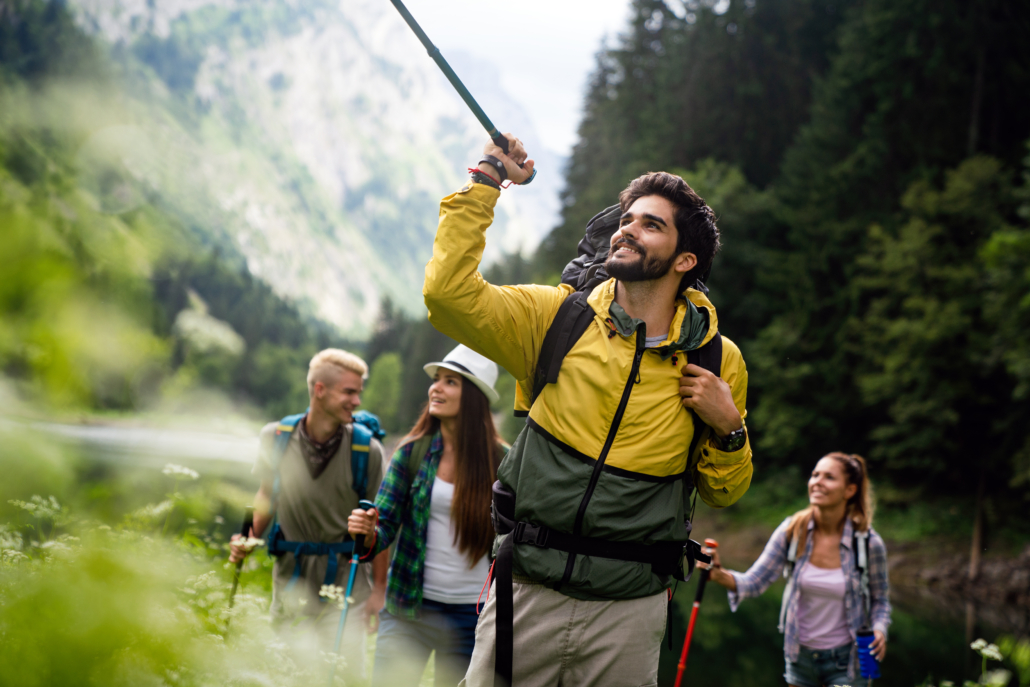
Modern life provides immense comfort, yet it simultaneously creates an environment of constant digital noise, sedentary habits, and chronic stress. As psychological burnout reaches unprecedented levels, mental health professionals and researchers are increasingly looking outside the traditional therapy office for solutions. A growing body of evidence points to a powerful, accessible antidote: outdoor exploration.
Venturing into natural environments—whether it involves hiking rugged mountain trails, navigating dense forests, or kayaking open waters—is more than a recreational pastime. It serves as a rigorous training ground for psychological endurance. Outdoor exploration builds mental resilience by altering brain chemistry, demanding real-time problem-solving, and offering perspective on human vulnerabilities.
The Neurological Impact of Natural Environments
To understand how outdoor exploration fosters resilience, one must first look at how the brain responds to nature. The human nervous system evolved in natural settings, yet modern humans spend roughly ninety percent of their lives indoors. This disconnect frequently manifests as a heightened state of chronic alertness, often referred to as the fight-or-flight response.
When an individual steps into a natural environment, a physiological shift occurs. Studies utilizing neuroimaging and biomarkers like cortisol show that exposure to green spaces significantly decreases the activity of the sympathetic nervous system. At the same time, it activates the parasympathetic nervous system, which governs rest and recovery.
Regulation of the Amygdala
The amygdala is the brain structure responsible for processing fear and emotional stressors. In high-density urban environments, the amygdala is consistently overstimulated. Outdoor exploration acts as a reset button. Spending extended time in nature reduces amygdala hyperactivity, which translates directly to a greater capacity to handle daily emotional stressors without spiraling into anxiety.
The Cortisol Drop
Cortisol is the primary stress hormone of the body. Prolonged elevation of cortisol weakens immune function, impairs memory, and reduces emotional regulation. Research indicates that as little as twenty minutes of immersion in nature significantly drops salivary cortisol levels. By lowered baseline stress hormones, the brain recovers its emotional equilibrium faster after experiencing a setback.
Voluntary Discomfort and Adaptive Stress
Resilience is not an innate trait that people either possess or lack; it operates like a muscle that strengthens through stress and subsequent recovery. In psychology, this concept is linked to hormonal responses and adaptive stress. By voluntarily stepping outside a climate-controlled, predictable indoor environment, explorers expose themselves to controlled challenges.
Nature does not conform to human convenience. Outdoor exploration inherently involves unpredictable weather, physical exertion, navigation errors, and unfamiliar terrain. Encountering these elements forces an individual to confront discomfort.
-
Physical Endurance as Mental Proof: Climbing a steep incline or enduring unexpected rain requires sustained physical effort. When an explorer pushes through physical fatigue to reach a destination, the brain registers a profound lesson: discomfort is temporary, and capability exceeds perceived limitations.
-
The Shift from Reactivity to Adaptability: In everyday life, unexpected changes often trigger frustration or panic. In the wilderness, throwing a tantrum because it starts to rain does not stop the rain. Explorers quickly learn to bypass useless emotional reactivity and move straight into action, such as putting on rain gear or finding shelter. This behavioral shift translates directly to professional and personal life challenges.
Overcoming Cognitive Fatigue Through Attention Restoration
The cognitive demands of modern work environments are relentless. Zoom meetings, smartphone notifications, and complex data streams require directed attention. This type of focus requires conscious effort and eventually leads to directed attention fatigue, leaving people irritable, easily distracted, and emotionally fragile.
Psychologists developed Attention Restoration Theory to explain how nature heals this cognitive depletion. Natural environments do not demand directed attention. Instead, they engage involuntary attention, or soft fascination. The movement of leaves, the patterns of rock formations, and the sound of moving water capture attention effortlessly.
This shift allows the prefrontal cortex—the area of the brain responsible for willpower, decision-making, and emotional control—to rest and restore. A restored prefrontal cortex is essential for resilience. When an individual is cognitively depleted, they are highly susceptible to emotional outbursts and poor choices. After a period of outdoor exploration, cognitive reserves are replenished, allowing the individual to approach life problems with clarity and emotional stability.
Self-Efficacy and Tactical Problem Solving
A core component of mental resilience is self-efficacy, which is an individual’s belief in their ability to execute behaviors necessary to produce specific performance attainments. High self-efficacy protects against depression and anxiety because it fosters a belief that one can influence outcomes rather than remaining a helpless victim of circumstance.
Outdoor exploration provides a continuous loop of action and immediate feedback that builds self-efficacy rapidly.
Navigational Autonomy
Reading a topographical map, using a compass, or tracking a trail marker requires active cognitive engagement. Successfully navigating from point A to point B without a digital map gives an individual a tangible sense of agency. They realize that their decisions directly caused their successful transit, boosting spatial confidence and self-reliance.
Micro-Problem Solving
Outdoors, small problems arise constantly. A boot lace breaks, a camp stove malfunctions, or a trail is blocked by a fallen tree. Solving these micro-problems requires resourcefulness. Because the consequences of ignoring these problems are immediate, individuals are forced to innovate. Each small problem solved serves as a building block for a broader psychological framework that views challenges as puzzles to solve rather than insurmountable roadblocks.
The Awe Factor and Ego Diminishment
One of the most profound psychological experiences unique to outdoor exploration is awe. Awe is defined as the emotion felt when confronted with something vast that transcends our current frame of reference. Looking out over the Grand Canyon, standing at the base of a towering redwood forest, or viewing a clear night sky filled with stars triggers this response.
Research shows that experiencing awe has significant benefits for mental health and resilience:
-
Perspective Shift: Awe diminishes the salience of the ego. In the presence of vast natural landscapes, personal worries, social anxieties, and minor daily stressors suddenly feel small and manageable. This shift in perspective prevents catastrophic thinking, which is a major driver of chronic anxiety.
-
Prosocial Behavior: Studies indicate that people who experience awe regularly display greater generosity, cooperation, and empathy. A strong social support network is a primary pillar of resilience, and nature-induced awe helps people connect more deeply with others.
Cultivating Mindfulness Without Meditation
Mindfulness is highly effective for building resilience, yet many people struggle with traditional seated meditation. The mind wanders, and frustration sets in. Outdoor exploration acts as a natural forcing mechanism for mindfulness.
When walking on a rocky trail, an individual must pay attention to where they place their feet to avoid injury. This immediate physical necessity pulls the mind out of repetitive loops of past regrets or future anxieties and grounds it firmly in the present moment. Furthermore, the multi-sensory nature of the outdoors—the scent of pine, the feel of wind, the crunch of gravel—engages the senses fully. This somatic grounding quietens the default mode network of the brain, which is the network active during rumination and self-referential thought. By disrupting negative thought loops naturally, outdoor exploration breaks the cycle of stress and strengthens emotional durability.
Frequently Asked Questions
How does the concept of green exercise differ from standard indoor exercise regarding mental health?
Green exercise refers to physical activity takes place in natural environments compared to indoor settings like gyms. While indoor exercise effectively releases endorphins and improves physical fitness, it lacks the cognitive restoration properties of nature. Indoor environments often feature mirrors, loud music, and televisions, which can maintain high stimulation levels. Green exercise combines the cardiovascular benefits of workouts with the cortisol-reducing, attention-restoring properties of natural landscapes, leading to greater reductions in anxiety and anger.
Can urban parks provide the same resilience benefits as wilderness exploration?
Urban parks offer valuable psychological relief and are excellent for daily stress reduction, but they do not build resilience to the same degree as deep wilderness exploration. True resilience building relies partly on navigating unpredictable challenges and experiencing voluntary discomfort. Urban parks are highly curated, predictable, and close to emergency services. Wilderness exploration introduces elements of self-reliance, isolation, and environmental problem-solving that are absent in manicured city parks.
What is the minimum amount of time someone must spend outdoors to experience psychological benefits?
Research suggests a threshold known as the nature prescription. Spending a cumulative minimum of one hundred and twenty minutes per week in natural environments is associated with significantly higher levels of health and psychological well-being. This time can be broken down into smaller increments, such as twenty minutes a day, or achieved in a single two-hour weekend hike. However, longer immersions of two to three days in deeper wilderness show the most profound impacts on resetting chronic stress pathways.
How does outdoor exploration help individuals processing trauma?
Trauma often leaves the nervous system trapped in a perpetual state of hypervigilance, where the brain constantly scans for threats. The predictable, rhythmic patterns found in nature—such as the fractal geometry of trees and the steady cadence of walking—signal safety to the evolutionary primitive parts of the brain. This somatic safety allows individuals with trauma to experience a calm state without the use of pharmaceutical interventions, helping them slowly recalibrate their baseline threat assessment.
Is there a correlation between the biodiversity of an environment and its impact on mental resilience?
Yes, recent environmental psychology studies indicate that the quality of the ecosystem matters. Environments with higher biodiversity—meaning a wider variety of plant and animal species—produce greater psychological restoration and mood enhancement than monoculture environments like commercial pine plantations or manicured lawns. The complex auditory and visual textures of a diverse ecosystem engage the mind more fully in soft fascination, leading to deeper cognitive recovery.
How can someone build mental resilience outdoors if they have physical limitations or disabilities?
Resilience through outdoor exploration is driven by the psychological intersection of challenge, adaptivity, and nature immersion, not just intense athletic output. Individuals with physical limitations can achieve these outcomes by engaging with adaptive outdoor programs, utilizing accessible wilderness trails, or practicing sit-spot techniques in wild environments. The mental resilience is built by overcoming the logistical hurdles, adapting to the outdoor elements, and experiencing the sensory restoration of nature, regardless of the physical distance traveled.
Why does natural light exposure during outdoor exploration affect emotional durability?
Outdoor exploration exposes individuals to full-spectrum natural sunlight, which is vastly brighter than indoor artificial lighting, even on overcast days. This exposure regulates the circadian rhythm by controlling the production of melatonin and boosting systemic serotonin levels. A well-regulated circadian rhythm improves sleep quality, and high serotonin levels stabilize mood. Because high-quality sleep and stable mood chemistry are foundational to emotional regulation, regular sunlight exposure directly underpins an individual’s capacity to withstand psychological stress.

Comments are closed.