

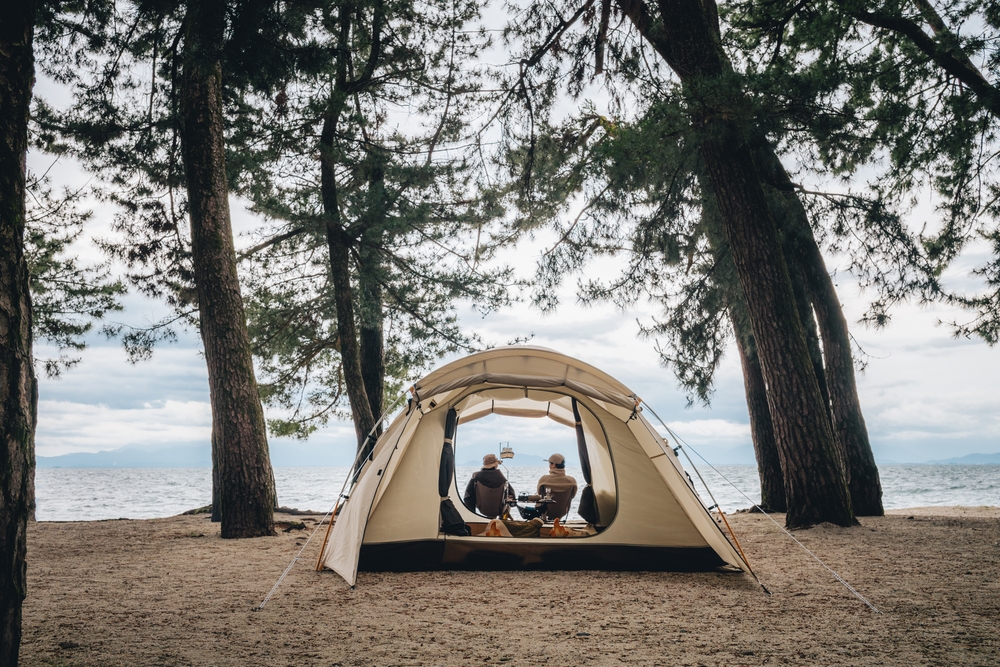
In an era defined by hyper-consumerism, digital saturation, and oversized living spaces, minimalism has emerged as a deliberate counterculture. Far from just a design aesthetic focused on empty white rooms, true minimalism is an intentional philosophy. It prioritizes experiences over possessions, eliminates physical and mental clutter, and focuses finite human energy on what truly matters.
While many individuals attempt to cultivate this mindset within their suburban homes or urban apartments, they often find themselves fighting a continuous uphill battle against societal conditioning. To truly understand and internalize the mechanics of intentional living, one must step completely outside the infrastructure of modern excess. Camping serves as the ultimate practical laboratory for the minimalist lifestyle. By forcing a radical reduction of possessions, simplifying daily routines, and replacing material entertainment with natural engagement, the outdoor excursion proves that human thriving requires remarkably little.
The Physical Constraint of the Backpack as a Filtering Mechanism
The core practice of minimalism involves auditing possessions to separate the essential from the superfluous. In an apartment or house, storage spaces like closets, garages, and basements disguise the sheer volume of unneeded items a person owns. There are few immediate consequences to holding onto objects just in case.
When an individual prepares for a camping trip, particularly a backpacking excursion, the structural limits of storage change dramatically. The physical space is reduced to a nylon pack, and every single item added must be carried on the human frame. This physical constraint transforms how objects are evaluated.
-
The Weight Consequence: In daily life, the weight of an item is rarely considered. On the trail, every ounce translates directly to physical exertion and gravitational strain on the spine and knees. The camper can no longer afford to carry duplicates or items of vague utility. The item must serve a critical, non-negotiable survival or comfort function, or it must be left behind.
-
The Multi-Function Requirement: Minimalism encourages the use of versatile tools rather than single-use gadgets. The constraints of camping echo this principle perfectly. A titanium cooking pot serves as a bowl, a water heating vessel, and a container. A lightweight bandana functions as a towel, a pot holder, a sun shield, or a water filter. This multi-functional utility trains the mind to look for adaptability in objects rather than accumulating specialized gear.
Redefining Luxury and Comfort Through Selective Deprivation
Modern society conditions individuals to confuse comfort with happiness and luxury with necessity. The baseline of everyday life includes climate-controlled air, instant hot water, soft mattresses, and automated appliances. Because these luxuries are constant, people become desensitized to them, requiring ever-increasing levels of consumption to experience a sense of novelty or satisfaction.
Camping introduces a deliberate system of selective deprivation that resets the psychological baseline of pleasure and appreciation.
The Transformation of the Mundane
After spending three days sleeping on a thin foam pad on uneven ground, returning to a standard mattress feels like an extraordinary luxury. After drinking filtered river water and eating dehydrated meals, a fresh vegetable or a hot cup of drip coffee tastes exceptional. By temporarily removing modern conveniences, camping strips away hedonic adaptation—the psychological tendency of humans to quickly return to a stable level of happiness despite major positive events.
Cultivating Radical Contentment
Inside a tent during a rainstorm, luxury is redefined entirely by basic metrics: a dry change of clothes, a functioning stove, and a waterproof nylon fabric overhead. This experience teaches a profound minimalist lesson. It demonstrates that security and contentment are not dependent on a massive footprint of real estate or high-end material goods, but on having just enough protection to meet foundational biological needs.
Streamlining the Daily Routine and Cognitive Loading
The average modern day is cluttered with an overwhelming number of micro-decisions. Choosing what to wear from a full closet, deciding what to eat from a grocery store containing thousands of options, and managing complex social media feeds cause decision fatigue. This continuous expenditure of cognitive energy leaves individuals feeling mentally exhausted without having accomplished anything of personal substance.
Camping strips away this cognitive static by radically simplifying the daily routine. In the wilderness, the daily agenda is dictating almost entirely by environmental realities and basic human maintenance.
The list of daily objectives is short and clear:
-
Navigating the designated route before nightfall.
-
Locating a reliable source of clean water and filtering it.
-
Establishing a secure shelter before temperatures drop.
-
Preparing a single hot meal over a compact heat source.
-
Managing metabolic heat and resting for the next day.
This behavioral clarity eliminates decision fatigue entirely. There are no choices regarding clothing because the camper brought only one or two functional changes. There are no complicated culinary choices because the food supply is predetermined. This reduction in micro-decisions clears immense space in the prefrontal cortex, shifting the mind from a state of chaotic reaction to a state of calm focus.
The Digital Cleansing and the Recovery of Present Focus
Minimalism is not confined to physical objects; digital minimalism is equally vital for modern mental health. Smartphones, constant connectivity, and the attention economy fragment human awareness, making deep focus and authentic presence nearly impossible to sustain.
While it is theoretically possible to turn off electronics at home, the environmental cues of the city constantly pull individuals back into digital habits. Camping in areas with limited or no cellular service creates a forced digital sabbatical that breaks this compulsive loop.
Without the digital window to peer into other people’s lives or monitor global news, the camper’s awareness is drawn back into their immediate physical reality. They must monitor the changing angle of the sun, read the terrain ahead, and pay close attention to their physical sensations. This forced mindfulness allows the nervous system to settle. The mind stops projecting forward into future anxieties or backward into past regrets, anchoring itself firmly in the immediate present. This mental stillness is precisely what minimalists seek when they strip away the distractions of modern society.
Experiential Investment and the Transience of Ownership
A foundational tenet of the minimalist lifestyle is the shift from material investments to experiential investments. Possessions depreciate, require physical maintenance, create spatial clutter, and often foster social comparison. Experiences, conversely, integrate directly into the human personality, shaping perspective, building resilience, and providing enduring psychological wealth.
Camping is an active investment in pure experience. The memories gathered on a journey—the sight of a mist-covered lake at dawn, the satisfaction of reaching an alpine pass, or the camaraderie shared around a small campfire—cannot be stored on a shelf or displayed to provoke envy.
Furthermore, camping highlights the fundamental truth of transience and impermanence. An outdoor enthusiast enters a wild space, sets up a temporary home for a single night, and packs it away the next morning, leaving no trace of their presence. This cycle teaches a healthy detachment from place and object. It reinforces the understanding that humans are merely temporary visitors passing through the world, and that trying to anchor identity to permanent physical acquisitions is an exercise in futility.
Frequently Asked Questions
How can a minimalist approach to camping prevent the trap of buying excessive specialized outdoor gear?
The outdoor industry frequently markets hyper-specialized gear for every specific scenario, which can easily lead to a consumerist mindset within the camping community. To resist this, a minimalist camper adopts a philosophy of skills over gear. Instead of buying complex gadgets to solve wilderness challenges, focus on developing outdoor knowledge, such as advanced knot-tying, wilderness navigation, and environmental resourcefulness. Prioritize high-quality, durable, multi-use items, and commit to completely wearing out existing equipment before considering a replacement.
What is the concept of Leave No Trace, and how does it intersect with a minimalist philosophy?
Leave No Trace is a framework of outdoor ethics designed to minimize human impact on natural ecosystems. Its core principles include packing out all trash, minimizing campfire impacts, and leaving natural objects undisturbed. This intersects perfectly with minimalism, as both philosophies reject the desire to dominate or alter an environment through consumption. Both mindsets advocate for a gentle, non-destructive relationship with space, emphasizing that true appreciation involves observing and experiencing rather than collecting, consuming, or permanently altering.
How does the minimalist concept of intentional space apply to the interior organization of a small camping tent?
In a confined space like a backpacking tent, physical disorganization immediately translates into psychological chaos and functional inefficiency. A minimalist applies intentional space by assigning a strict, designated purpose to every square inch of the tent interior. Sleeping systems occupy the center, clean clothes double as a pillow, and critical items like headlamps and knives are stored exclusively in specific mesh pockets for immediate access in the dark. This disciplined spatial management prevents clutter, reduces stress, and ensures smooth operation within a restricted environment.
Can car camping offer the same minimalist benefits as deep wilderness backpacking?
Car camping allows for a much larger volume of gear, which can tempt individuals to replicate their entire household comfort level at the campground. However, car camping can still provide significant minimalist benefits if approached with strict intentionality. The key is to deliberately limit the inventory of items brought, choosing to camp with a basic setup rather than packing the vehicle to capacity. The primary minimalist value—simplifying routines and removing digital distractions—can be achieved in any campground as long as consumer habits are consciously checked.
Why do minimalist campers prefer dehydrated or one-pot meals over complex campsite cooking?
Complex campsite cooking requires an extensive array of utensils, multiple fuel sources, coolers, and significant cleanup infrastructure, which reintroduces household complexity into nature. Dehydrated or one-pot meals streamline the entire metabolic process. They require only a single heat source, minimal water, and a single utensil. This reduction in culinary logistics minimizes preparation time and eliminates the burden of heavy cleanup, allowing the camper to dedicate their evening energy to relaxation, conversation, and observing the natural surroundings.
How does adopting a minimalist camping style influence a person’s standard home consumption habits upon their return?
Returning to a modern home after a minimalist camping trip provides an objective, almost jarring look at household excess. Walk through your living space after relying on a single backpack for survival reveals how many items in your house are entirely redundant. This contrast often triggers a desire to declutter, simplify wardrobe choices, and reduce unnecessary spending. The wilderness experience acts as a psychological baseline, proving that you can be deeply content with very little, which permanently alters your consumer evaluation process.
What is the relationship between minimalist clothing selection and odor management while camping?
Minimalist camping requires wearing the same clothing items for multiple consecutive days, which demands a functional understanding of fabric performance. Minimalists avoid synthetic fabrics like polyester for long garments because synthetics quickly collect and retain body oils and bacteria, causing rapid odor buildup. Instead, they invest in high-performance natural fibers like merino wool. Merino wool possesses natural antimicrobial properties that resist odor for days of continuous wear, allowing a camper to bring far fewer garments without compromising personal comfort.

Comments are closed.