

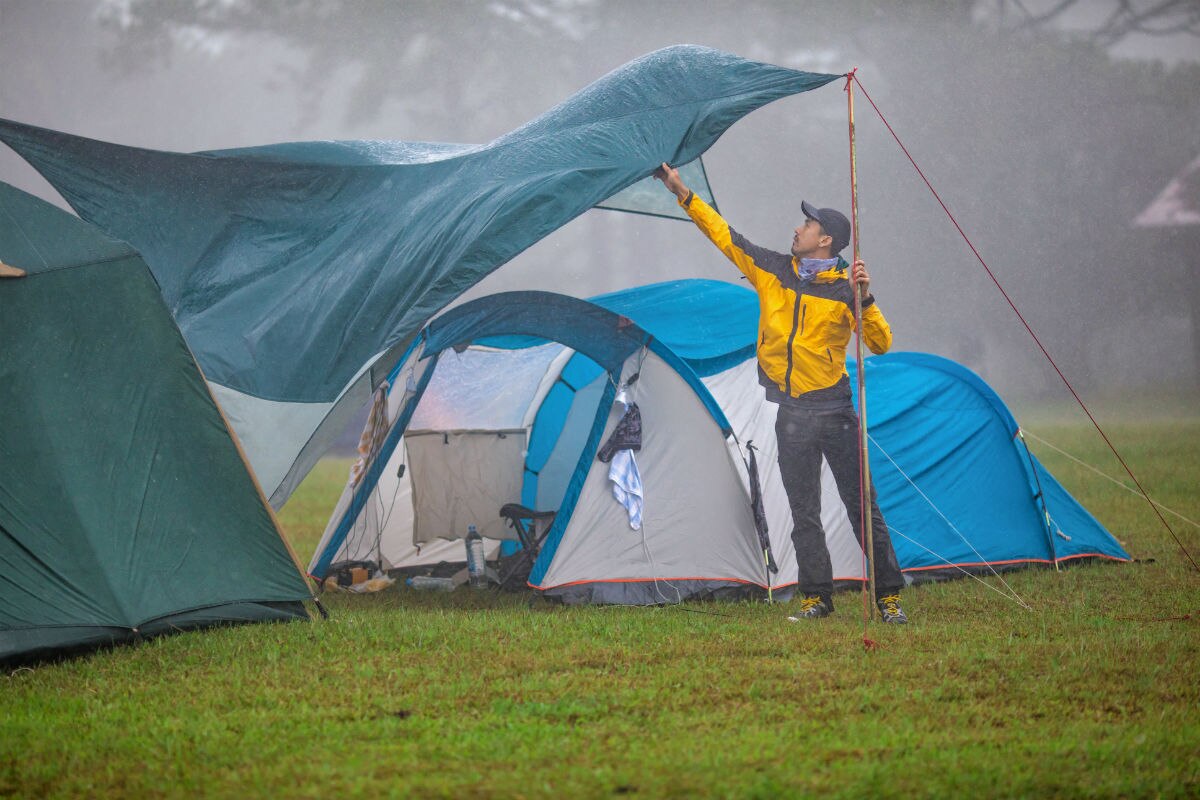
Camping is fundamentally an exercise in stepping outside the artificial climate control of modern architecture and immersing oneself in the natural world. While a chosen landscape—whether a dense pine forest, a sweeping desert, or a dramatic coastal cliffside—provides the physical stage for an outdoor excursion, it is the weather that dictates the actual reality of the experience.
Weather is not merely a background setting; it is a dynamic force that alters human behavior, reshapes local ecosystems, redefines safety parameters, and deeply impacts psychological states. A single campsite can transform from a serene sanctuary into a hostile environment within a matter of hours purely due to atmospheric shifts. Understanding how different weather conditions manipulate the camping experience is essential for anyone seeking to transition from a casual fair-weather tourist to a resilient, capable outdoorsperson.
The Sensory and Psychological Magic of Clear, Temperate Conditions
Clear skies and moderate temperatures represent the idealized vision of camping. This meteorological baseline facilitates an ease of movement and a relaxed psychological posture that contrasts sharply with the vigilance required during severe weather.
When the atmospheric pressure is high and stable, the physical boundaries of a tent expand. The shelter transitions from a survival cocoon into a simple storage space, allowing the camper’s life to unfold entirely outdoors.
-
Circadian Realignment: Under clear skies, the absence of cloud cover maximizes exposure to natural light transitions. The unfiltered blue light of dawn suppresses melatonin production efficiently, while the gradual fading of twilight triggers its release. This synchronization stabilizes sleep architecture, creating a deep sense of physical restoration.
-
The Auditory Landscape: Calm, clear weather allows the subtle acoustic profile of a landscape to emerge. Without the masking sound of heavy wind or rain, campers can discern the distinct vocalizations of local wildlife, the rustle of small mammals in the undergrowth, and the gentle movement of air through different tree species. This reduction in auditory clutter induces a state of soft fascination, lowering neurological stress.
Rain and High Humidity as Catalysts for Intentionality
The arrival of rain fundamentally alters the physics and logistics of a camping trip. Precipitation forces a dramatic contraction of spatial boundaries and demands an immediate transition from passive relaxation to tactical planning.
Rain transforms the campground by testing the integrity of gear and the foresight of the camper. It reveals every minor flaw in site selection, knot tying, and clothing management, turning mundane tasks into deliberate exercises in moisture control.
Micro-Site Selection and Hydrology
Under clear skies, pitching a tent in a slight depression or near the base of a slope seems inconsequential. Rain provides an immediate, unforgiving lesson in local hydrology. A minor depression can quickly become a collection pool for runoff, while compacted soil around high-use camp areas accelerates water accumulation. Campers must learn to read the subtle topography of the land, identifying high ground, assessing soil drainage capacity, and predicting water pathways to maintain a dry living space.
The Dynamics of Condensation
High humidity and continuous rain introduce a paradoxical challenge: managing moisture generated from within the shelter. A single adult expels a significant amount of water vapor overnight through respiration and sweat. In high-humidity conditions, this vapor cannot easily escape if a tent is sealed tightly against the rain. It hits the cold fabric of the rainfly, condenses, and creates an internal mist. Managing this requires a counterintuitive approach—opening ventilation ports to allow airflow, even when the air outside is damp, to equalize temperature and moisture differentials.
Wind as an Architectural and Psychological Stressor
Of all the common weather phenomena encountered while camping, wind is often the most physically destructive and psychologically exhausting. Unlike rain, which can be escaped by retreating into a waterproof shelter, high winds directly challenge the structural stability of that shelter.
Wind exerts immense dynamic pressure on tents, tarps, and camp infrastructure. It exploits loose guidelines, poorly driven stakes, and structural weaknesses with relentless repetition.
-
Mechanical Vigilance: Camping in high winds requires ongoing physical maintenance. Guy lines must be tensioned correctly to distribute loads across the tent frame, stakes must be weighted down with heavy rocks or logs, and camp kitchens must be shielded to prevent thermal loss during cooking.
-
Auditory Fatigue: The psychological impact of prolonged wind is rooted in acoustic saturation. The continuous roaring, flapping of fabric, and creaking of nearby trees create an intense, unyielding auditory environment. This prevents the nervous system from entering a restful state, leading to sleep deprivation and a form of mental exhaustion known to outdoor professionals as wind fatigue.
-
The Hazard of the Canopy: Wind transforms the forest canopy from a protective shield into a source of objective hazard. Dead branches, often called widowmakers, can be dislodged by strong gusts and fall without warning. Camping in high winds demands constant aerial awareness and the ability to distinguish healthy trees from compromised timber when establishing a campsite.
Extreme Heat and the Battle Against Thermal Regulation
While many people associate winter camping with severe physical hardship, managing extreme heat can be equally challenging and mathematically less forgiving. High ambient temperatures, coupled with solar radiation, turn the camping experience into a strict exercise in thermal regulation and hydration logistics.
In a hot environment, the camp routine must shift to mirror the rhythms of desert wildlife. Activity patterns must pivot entirely, compressing strenuous tasks like hiking or chopping wood into the early dawn and late twilight hours.
The Greenhouse Effect of Synthetic Fabrics
Modern tents are engineered to trap heat and block wind, which makes them highly inefficient in extreme heat. Direct sunlight can turn a nylon or polyester tent into a greenhouse, raising internal temperatures far above the ambient outside air. Campers must adapt by removing the rainfly entirely during the day, utilizing shade tarps suspended high above the tent body to block solar radiation while allowing breezes to pass through, or shifting to hammocks to maximize full-body convective cooling.
Hydration and Electrolyte Mathematics
In high heat, the human body relies exclusively on evaporative cooling through sweat to maintain a safe core temperature. This process depletes systemic water and essential salts rapidly. A camper in extreme heat can easily require greater than six liters of water per day. This necessity transforms the camping experience into a continuous logistical loop of locating water sources, filtering or treating the supply, and monitoring electrolyte intake to prevent hyponatremia or heat exhaustion.
Cold Weather and the Art of Thermal Layering
Cold weather camping strips away the margin for error, transforming a recreational trip into a highly disciplined study in thermodynamics. In a freezing environment, every action—from how one breathes to how one packs a sleeping bag—carries a direct consequence for physical comfort and safety.
The primary objective of winter camping is the preservation of metabolic heat. This is achieved not through a single heavy garment, but through the active management of a multi-tiered clothing system.
-
The Baseline Layer: The layer next to the skin must be constructed of hydrophobic materials like merino wool or synthetic polyester. Cotton must be completely avoided because it absorbs moisture and retains it against the skin, accelerating conductive heat loss.
-
The Insulation Layer: Trapping dead air is the core principle of insulation. Fleece, down, or high-loft synthetics create a microscopic network of spaces that hold the air warmed by body heat. Campers must learn to regulate these layers actively, removing insulation before starting physical work to prevent sweating, and adding it immediately upon stopping to lock in residual warmth.
-
The Boundary Layer: The outer shell must protect the insulation layers from wind and external moisture. If wind is allowed to penetrate the insulation layer, it strips away the pocket of warm air through convection, dropping core temperatures rapidly.
Frequently Asked Questions
How does atmospheric pressure affect the behavior and presence of insects around a campsite?
Insects are highly sensitive to barometric pressure changes. When a low-pressure system approaches, indicating incoming rain or stormy weather, many insects experience a drop in flight efficiency due to changes in air density. Consequently, species like mosquitoes and biting flies often become exceptionally aggressive right before a storm as they seek a blood meal before taking cover. Conversely, during stable high-pressure systems, insects distribute themselves more naturally throughout the environment, making their presence less concentrated around the campsite.
Why do campfires behave differently in high-humidity or foggy conditions compared to dry air?
High humidity and fog introduce microscopic water droplets into the air surrounding the campfire. As the fire burns, a significant portion of its thermal energy is wasted heating and vaporizing this ambient moisture rather than heating the fuel wood. Furthermore, damp air is denser, which can suppress the upward draft of the fire, causing smoke to linger close to the ground rather than rising cleanly. This requires the camper to build a more open, vertically oriented wood structure to maximize oxygen flow.
How does a sudden drop in temperature overnight affect the battery life of camping electronics?
Cellular phones, GPS units, and headlamps rely on lithium-ion batteries, which depend on chemical reactions to store and release electricity. When temperatures drop near or below freezing, these internal chemical reactions slow down dramatically. This increases the internal resistance of the battery, causing it to lose its charge rapidly or report a false low-battery reading. To mitigate this weather effect, experienced campers store critical electronics inside their sleeping bags or inner clothing layers overnight to utilize body heat.
What is the psychological explanation for why the sound of steady rain on a tent rainfly promotes deep sleep?
The sound of rain hitting a synthetic tent fly functions as a natural form of pink noise. Unlike white noise, which has equal power across all frequencies, pink noise features deeper, richer sounds at lower frequencies. This auditory pattern mimics the internal rhythms of the human brain during deep relaxation. Furthermore, the acoustic consistency of steady rain masks sudden, disruptive outdoor noises—such as a falling branch or a nocturnal animal movement—preventing the amygdala from triggering an arousal response during sleep.
How do different cloud formations serve as early warning systems for changing weather conditions while camping?
Clouds are visible indicators of atmospheric stability and moisture levels. For example, high, wispy cirrus clouds, often called mares’ tails, indicate the arrival of a warm front and suggest that rain may follow within twenty-four to thirty-six hours. If a camper observes cumulonimbus clouds growing vertically throughout the afternoon, it signals severe atmospheric instability, warning of imminent localized thunderstorms, downburst winds, or lightning strikes, allowing time to reinforce the campsite shelter.
Why does food cooked over an outdoor stove take longer to prepare at high altitudes during cold, windy weather?
This delay is a result of a double meteorological challenge: decreased atmospheric pressure and convective heat loss. At high altitudes, the boiling point of water drops below the standard two hundred and twelve degrees Fahrenheit, meaning water boils at a lower temperature and cooks food slower. When cold wind is added to the equation, it continuously strips heat away from the cooking vessel through convection. Without a dedicated wind windscreen, an outdoor stove can consume twice as much fuel and triple the required cooking time.
How does the UV index affect the degradation rate of modern camping gear during extended trips?
Extended exposure to high ultraviolet radiation breaks down the molecular bonds of synthetic fabrics like nylon and polyester, which are standard in modern tents and backpacks. This process, known as UV degradation, causes the fabric to lose its tensile strength, fade in color, and become brittle. Over time, the waterproof polyurethane coatings can crack and peel away. Campers spending weeks in high-UV environments like alpine zones or deserts must intentionally select shaded sites or pitch UV-resistant tarps to preserve the structural life of their primary gear.

Comments are closed.